
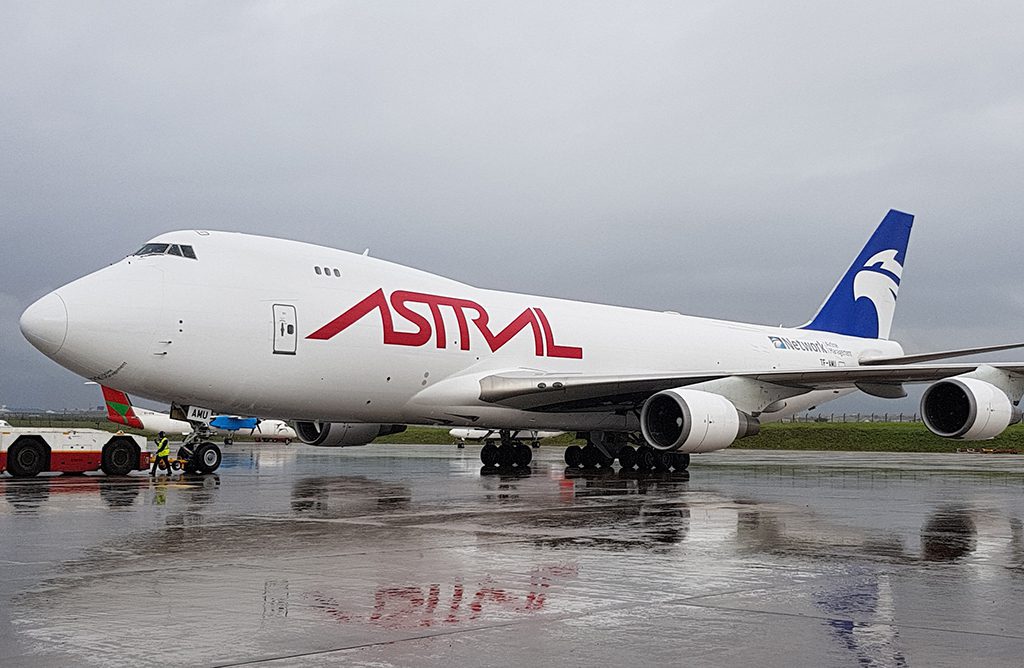
Passenger airlines get the romance. They get the water-cannon salutes, the ribbon cuttings, the national colours painted on tails, the speeches about connecting people and opening markets.
Cargo rarely gets that stage. It moves at night, in warehouses, behind airport fences, in the bellies of passenger aircraft and the holds of freighters that most travelers will never board. It carries the things economies cannot wait for, vaccines, flowers, medicines, spare parts, mining equipment, relief supplies, election materials, e-commerce parcels, fish, fruit, and urgent industrial components.
And in Africa, where roads can be slow, borders complex, infrastructure uneven, and distances unforgiving, cargo is not a side business. It is often the difference between a supply chain that works and one that simply does not.
Table of Contents
That is why the story of Sanjeev Gadhia and Astral Aviation is important for Africa.
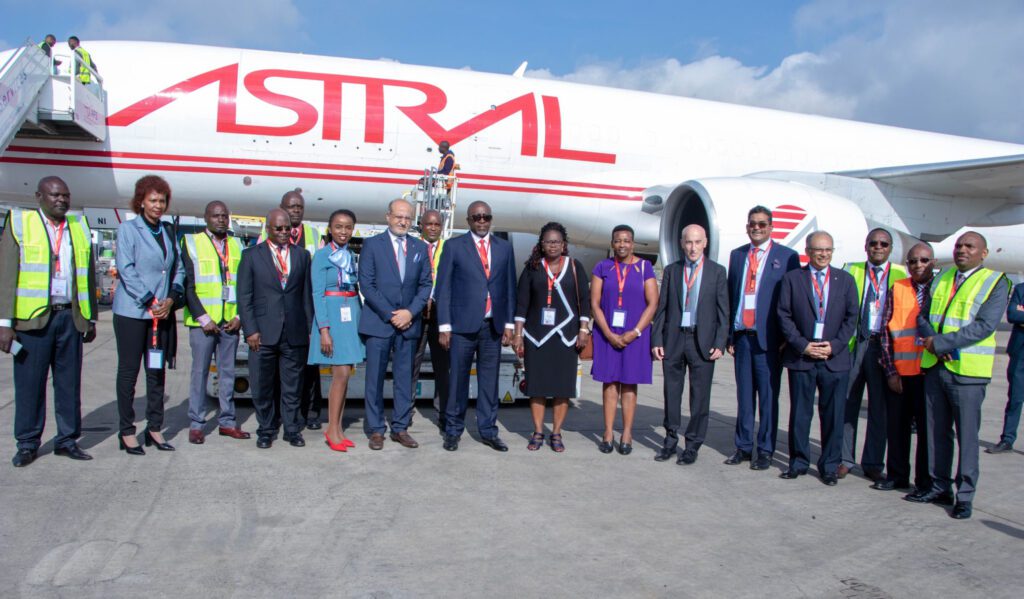
For more than two decades, Astral has occupied a space in African aviation that is easy to overlook but difficult to replace. It does not carry the glamour of a national passenger carrier. It does not fly millions of tourists into holiday destinations. It does not dominate the public imagination in the way Ethiopian Airlines, Kenya Airways or South African Airways might. But quietly and consistently, it has become one of the continent’s most important cargo operators, connecting Africa to itself and to the world through an industry whose importance is often only fully appreciated in moments of crisis.
I have met Sanjeev, and what strikes you first is not the scale of what he has built, but the modesty with which he carries it. In a world where ego often arrives before substance, he is one of those rare aviation executives whose humility almost disguises the magnitude of his work.
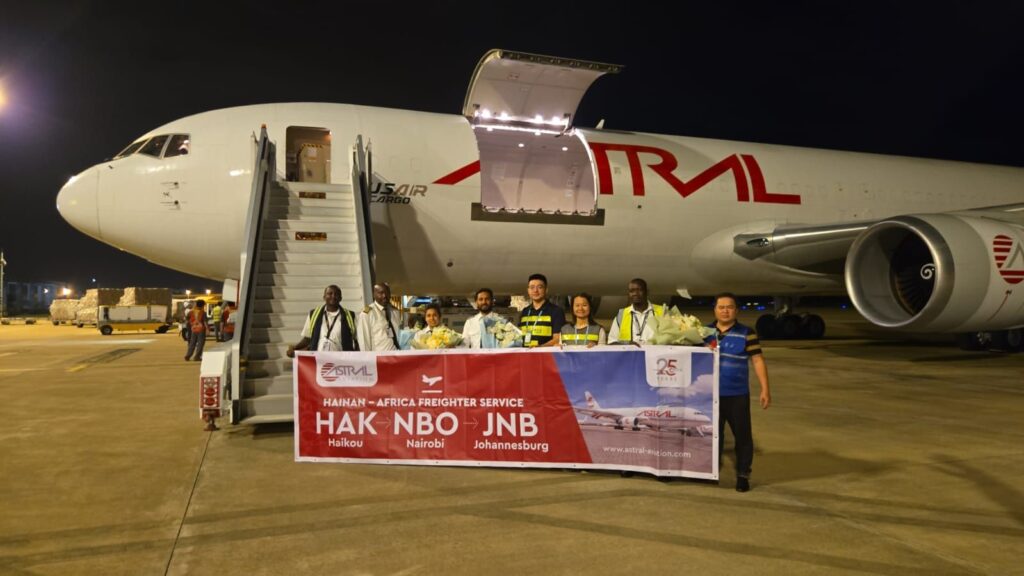
Astral Aviation, founded in 2000 and based at Jomo Kenyatta International Airport in Nairobi, has grown to become Africa’s largest dedicated cargo airline operating scheduled, charter, ACMI, humanitarian, pharmaceutical, perishables, mining, oil and gas, express and relief services. The company says its intra-African network spans about 50 destinations and that it works with more than 60 interline partners, more than 25 global GSAs and hubs including Nairobi, Dubai, Johannesburg and Liège.
The banker who saw what others missed
Sanjeev’s story is not the standard aviation myth. He was not a pilot who dreamed of aircraft as a child. In one interview, he described himself plainly as a Kenyan-born banker by profession who moved into aviation after seeing a gap in the market. Astral, he explained, had already been operating for 15 years at the time of that 2015 interview, which he noted was “a very long time for a private airline to have been around in Africa.”
That observation is more profound than it seems. Private airlines in Africa rarely survive long. The continent is littered with failed carriers that collapsed under the weight of high fuel costs, weak capitalisation, regulatory friction, currency risk, and market fragmentation. Passenger airlines at least have national sentiment, political visibility, and sometimes state rescue. Cargo airlines usually do not. They live or die by utility.
Astral was born because Africa had a cargo gap. In a 2021 feature, Logistics Update Africa traced the company’s beginnings to Sanjeev’s realization around 2000 that Africa lacked dedicated freighter capacity, partly because cargo was often treated as secondary revenue that could simply be carried in passenger aircraft bellies. The shortage of freighters, combined with strong demand for humanitarian cargo, created the opening from which Astral emerged.
This is the entrepreneurial insight at the heart of the story: Sanjeev did not build Astral around glamour. He built it around necessity.
The business nobody notices until it is needed
Air cargo is the humble workhorse of aviation. It is not always visible in national connectivity debates, yet it powers some of Africa’s most important export and emergency systems. Kenya’s flowers, Ethiopia’s perishables, West Africa’s pharmaceuticals, Central Africa’s mining inputs, East Africa’s humanitarian supply chains and the continent’s growing e-commerce ambitions all depend, in different ways, on air freight.
The numbers show why this sector deserves far more attention.
IATA’s latest data shows that African airlines are not just growing, they are now leading the world in cargo expansion. In February 2026, African carriers recorded a 21.0% year-on-year increase in air cargo demand, the strongest growth of any region and nearly double the global average of 11.2%. This followed an already strong start to the year, with Africa posting 18.2% growth in January, extending a run of consistent double-digit gains.
And yet Africa remains a small player in global air cargo. Recent industry discussions and commentary have put Africa’s share of global air cargo around only 2%.
That contrast is crucial. Africa is growing quickly, but from a low base. It has the demand, but not yet the full infrastructure. It has exports, but not always the cold chain. It has trade potential, but not always the cargo connectivity. It has urgent need, but too often limited capacity.
This is the space Astral has spent 25 years trying to fill.
Covid, vaccines and the moment cargo became visible
The pandemic was the moment the world rediscovered air cargo. Passenger aircraft were grounded. Borders closed. Supply chains strained. Suddenly, the quiet side of aviation became the essential side.
Astral was among the African carriers that stepped into that emergency. In 2021, Astral joined Ethiopian Airlines and other carriers in signing an agreement with UNICEF to prioritize the transport of Covid-19 vaccines, essential medicines, medical devices and other critical supplies.
This was not new territory for Astral. The company had already built experience moving vaccines and pharmaceutical products across Africa. In 2020, Aviation Week reported that Astral had transported thousands of tonnes of vaccines and pharma products over its 20-year existence, including support for Ebola response in the DRC and cholera response in Yemen.
That history matters because it shows why air cargo cannot be treated as an auxiliary activity. In a crisis, cargo is public health infrastructure. It is humanitarian infrastructure. It is national resilience infrastructure.
When vaccines needed to move, the glamour disappeared from aviation. What mattered was cold chain, aircraft availability, permissions, route knowledge, regulatory compliance and execution.
That is the world Sanjeev and Astral had already built for.

The hard economics of an essential business
The romance of Astral’s story should not obscure the difficulty of the business.
Cargo aviation in Africa is brutally complex. Costs are high. Fuel is volatile. Taxes and charges are heavy. Demand can be uneven. Infrastructure varies dramatically from one airport to another. Cargo operators deal not only with airports and regulators, but also with customs systems, freight forwarders, humanitarian agencies, exporters, mining companies, pharmaceutical firms and governments.
In a 2025 Business Daily interview, Sanjeev pointed to the continuing challenges of African aviation, including high taxation and fuel volatility. Fuel, he said, accounts for 55% of Astral’s expenses, making geopolitical shocks and price swings a constant risk.
That single figure tells you why cargo airlines need discipline. A passenger carrier can sometimes cover inefficiency with state support, prestige routes or political protection. A cargo airline has fewer places to hide. If it cannot operate reliably, price sensibly, and manage costs carefully, the market moves elsewhere.
Astral’s longevity is therefore not accidental. It is evidence of operational maturity. And Excellence in a business that is not just about flying aircraft. It is about solving problems.
Why African passenger airlines should pay attention
One of the recurring weaknesses of African aviation is that many passenger airlines still treat cargo as secondary.
This is understandable, but increasingly dangerous. For decades, many African carriers viewed cargo as belly revenue, something carried beneath passengers rather than developed as a strategic business line. But the pandemic exposed the weakness of that thinking. When passenger demand collapsed, airlines with serious cargo capability had a lifeline. Those without it had little to fall back on.
Ethiopian Airlines understood this better than most. Its cargo business became a major source of resilience during Covid and remains central to its group model. Astral understood it from the beginning because cargo was not a supplement to its business. It was the business.
African airlines need to be more alive to this. The future of African aviation will not be built on passengers alone. AfCFTA, e-commerce, pharmaceuticals, perishables, mining, oil and gas, humanitarian response and regional manufacturing all require logistics systems that can move quickly across a continent still struggling with ground transport bottlenecks.
Sanjeev himself has been optimistic about e-commerce, even while acknowledging Africa is behind the global curve. Recent commentary attributed to him suggested Africa’s first major e-commerce boom could come around 2027, with some estimates placing the short-term opportunity between $40 billion and $75 billion.
If that growth materializes, the question is obvious: who will carry it?
Astral as a model of African entrepreneurial aviation
There is another reason this story deserves celebration. Astral is not a state rescue story. It is not a national prestige project. It is not a flag carrier revived by decree.
It is an entrepreneurial African aviation story. Founded in Kenya, fully Kenyan-owned according to AFRAA’s member profile, and built over more than two decades in one of the world’s hardest aviation environments, Astral represents a kind of African airline that does not always receive enough attention. It is private, specialized, resilient and practical.
Perhaps what makes Sanjeev’s story so compelling is that it does not follow a familiar script and Astral is not glamorous because cargo rarely is. But it is important precisely because it does the work that glamour often hides.
The lesson for Africa
The lesson from Astral is not that every African airline should become a freighter operator. It is that every African aviation strategy must take cargo seriously.
Air cargo is not an afterthought. It is the circulatory system of trade. It is what allows flowers to reach Europe, vaccines to reach clinics, relief supplies to reach conflict zones, mining equipment to reach inland economies, and e-commerce to reach consumers.
It is also one of the clearest areas where African airlines can build resilience. Passenger demand will fluctuate. Tourism will rise and fall. Political shocks will close routes. Pandemics may return in some form. But economies will always need to move goods.
Cargo gives aviation a second lung.
For too long, Africa’s aviation conversation has been dominated by passenger networks, national carriers and long-haul ambitions. Those matter. But the quieter story may be just as important, the companies that move what the continent needs when it cannot wait.
Sanjeev Gadhia and Astral Aviation have been doing that work for 25 years. Quietly. Reliably. Without the glamour. And perhaps that is exactly why the story deserves to be told.
We work with a small number of industry partners to deliver high-impact visibility to a focused audience of aviation professionals and decision-makers.
To explore sponsorship opportunities, reach out: derek@airspace-africa.com