On Monday, drones struck Khartoum’s international airport, the first attack on the capital in months, shattering a fragile return to normalcy. Just one week prior, the airport had received its first international arrival since the civil war began, a Kuwait Airways flight bringing back 300 Sudanese citizens.
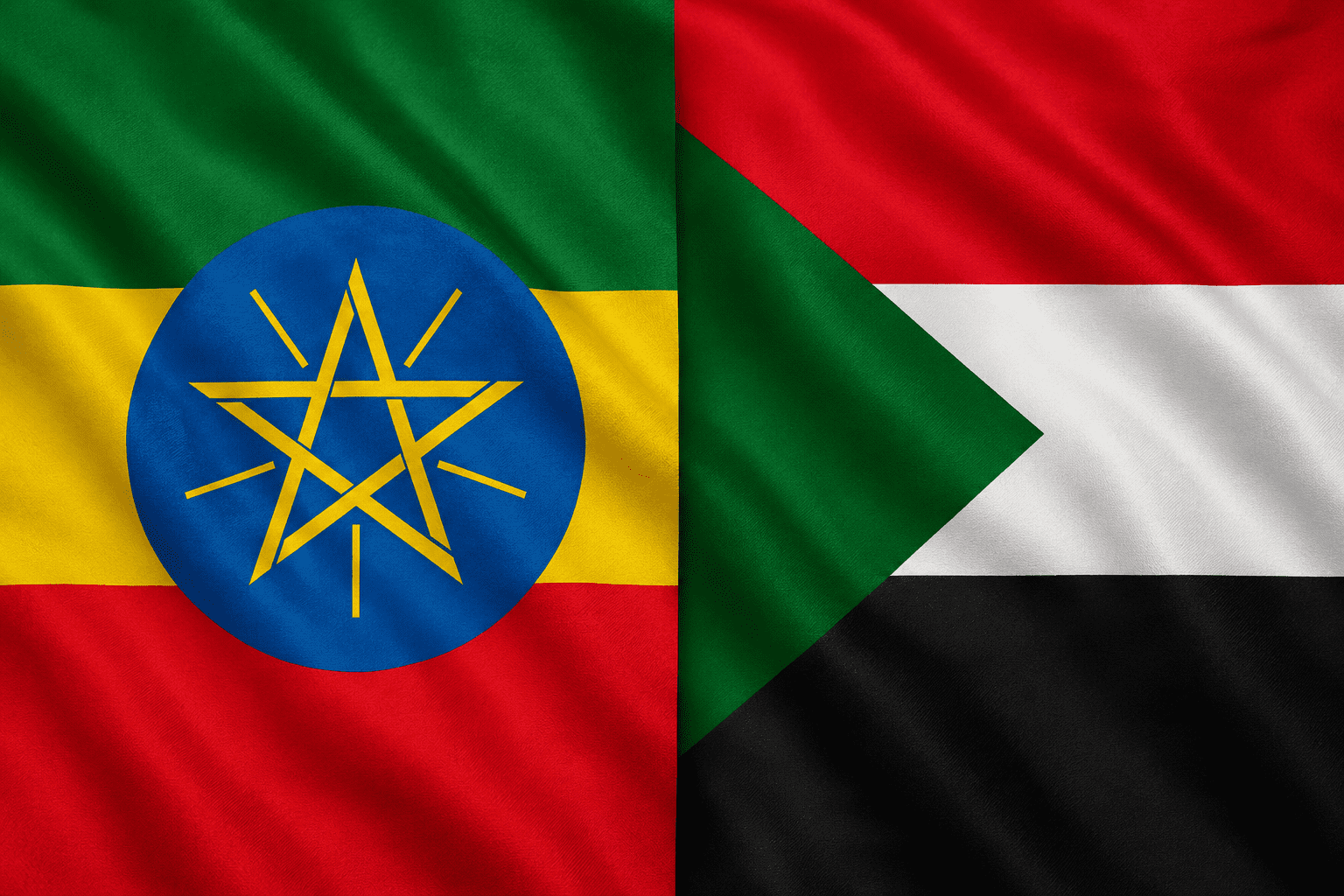
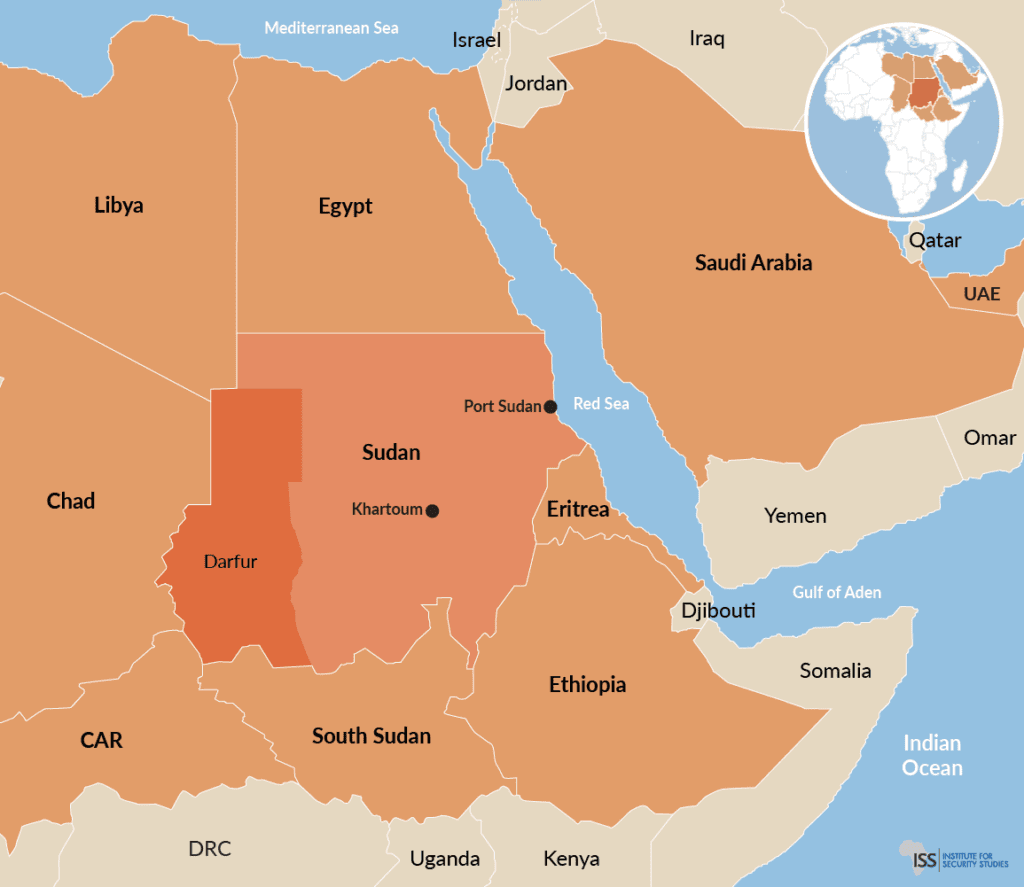
Sudan’s military said it had conclusive evidence the drones were launched from Bahir Dar airport in Ethiopia and constituted what it referred to as “direct aggression.” Khartoum recalled its ambassador to Addis Ababa. Ethiopia denied everything, calling the accusations “baseless” and made “at the behest of external patrons” – a likely reference to Egypt, which backs Sudan’s army and is locked in an existential dispute with Addis Ababa over the Nile water rights.
Egypt’s foreign ministry in turn, described attacks launched from “the territory of a neighbouring country” as a flagrant violation of Sudanese sovereignty – language that condemned Ethiopia without triggering a formal diplomatic rupture. Saudi Arabia called on “neighbouring countries of Sudan” to respect Sudan’s sovereignty and prohibit the use of their territory “as a Launchpad for such attacks,” a formulation that managed simultaneously to condemn Ethiopia, and gesture toward its own backing of the Sudanese Armed Forces (SAF).
Is war between Ethiopia and Sudan imminent?
The episode marks a dangerous escalation in what has become one of the world’s most tangled regional proxy conflicts. Sudan’s three-year civil war between the SAF and the paramilitary Rapid Support Forces (RSF) has steadily drawn in outside powers, each pursuing its own agenda.
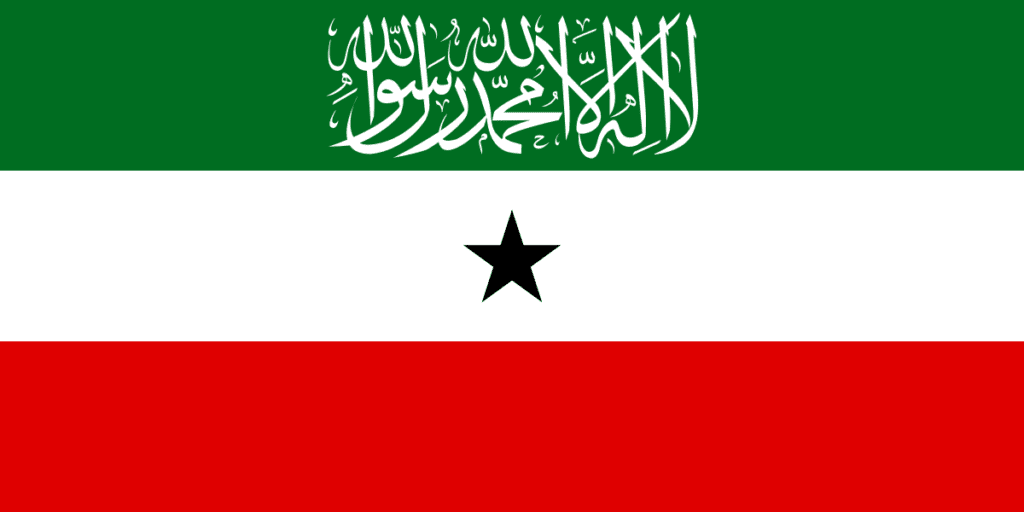
The immediate trigger is Ethiopia’s alleged support for the RSF. Satellite imagery analysed by Yale University’s Humanitarian Research Lab, published last month, documented extensive activity at an Ethiopian National Defence Force base in Asosa, near the Sudanese border – including the arrival of hundreds of technical vehicles consistent with RSF combat use, and supply chains traceable to a United Arab Emirates (UAE) base in Berbera, Somaliland.
Reuters had earlier confirmed the existence of an RSF training base in Ethiopia’s Benishangul-Gumuz region, estimating over 4,000 fighters were present in January.
Though Ethiopia has denied all of the accusations, its motivations for backing the RSF are not difficult to understand. The Sudanese army is closely aligned with Egypt and Eritrea – both of whom Ethiopia regards as existential adversaries. Egypt views a SAF victory as essential to stemming refugee flows, preserving a friendly government on its southern border and maintaining leverage in its dispute with Ethiopia over the Grand Ethiopian Renaissance Dam (GERD).
Eritrea backs the SAF as a hedge against Ethiopian military ambitions toward its Red Sea coast. From Addis Ababa’s perspective, a triumphant Sudanese army aligned with Cairo and Asmara would effectively complete the encirclement of Ethiopia from the north, west and east. Supporting the RSF is designed to prevent that circle from closing.
Al-Nour “Qubba,” a senior RSF commander who recently defected to the Sudanese army in April, told reporters that RSF chief Mohamed Hamdan Dagalo, known as Hemedti, has been directing operations remotely by phone while moving between African capitals, naming Ethiopia among the countries where the RSF leader operates.
Hemedti has made few public appearances since Sudan’s civil war began three years ago; his physical whereabouts have become a matter of persistent speculation. The image that emerges from Qubba’s admission of a paramilitary commander “directing a genocide by telephone” from neighbouring capitals captures the grotesque internationalisation of a conflict that has already killed at least 150,000 people and displaced 13 million.

The same countries enabling that internationalisation gathered in Berlin in April for the third international conference on Sudan, pledging €1.5 billion in humanitarian assistance while their proxies continued fighting on Sudanese soil. The United States, the EU, Egypt, Ethiopia, Saudi Arabia and others signed the Berlin Principles, a document calling for an end to all external military support to the warring parties, a commitment that, within a fortnight, appeared to mean very little.
Indeed, the gap between diplomatic declarations and ground reality is incredibly wide and is a recurrent feature of international peace-making in Sudan. The US-led Quad of mediators (Washington, Riyadh, Abu Dhabi and Cairo) has made no meaningful progress for a simple reason: the countries tasked with ending the war are the same countries keeping it alive.
The Iran war has also made diplomatic progress on Sudan near-impossible. Washington launched a conflict that is now undermining the economies of the very partners it needs to broker peace in Sudan. The UAE is facing Iranian attacks that have disrupted its energy exports. Egypt has imposed nighttime curfews to conserve energy, its electricity grid strained by the loss of Gulf gas shipments since Iran closed the Strait of Hormuz. Saudi Arabia’s Vision 2030, on which the kingdom’s entire post-oil future rests, depends on regional stability that has ceased to exist.
In short, none of these countries have the bandwidth for Sudan right now. Washington, the Quad’s convener and the only power with leverage over all parties, is consumed by the Iran war and spiralling energy costs at home, and is in no position to demand that anyone stop.
What makes the current moment particularly dangerous is the convergence of multiple crises. In northern Ethiopia’s Tigray region, the Tigray People’s Liberation Front (TPLF) – the regional party that dominated Ethiopian national politics for nearly three decades before its 2020 clash with Abiy Ahmed’s federal government triggered a war that killed an estimated 600,000 people – has just reinstated its own parliament and elected Debretsion Gebremichael as regional president.
The move is a direct challenge to federal authority that mirrors the provocation (regional elections in defiance of the federal government) that started that conflict. In Ethiopia’s federal order, regions cannot legally install their own parliaments or presidents without federal approval. Addis Ababa has signalled its condemnation with military jet flyovers over Tigray.
Eritrea, which fought alongside Ethiopia against the TPLF in that war before their alliance collapsed, has since cultivated the TPLF as a proxy against Addis Ababa, while simultaneously backing Sudan’s army – hosting SAF aircraft on its airbases, and training eastern Sudanese militias. Asmara is therefore simultaneously pressing on Ethiopia from the north through the TPLF, and from the west through the SAF.
Ethiopia’s foreign ministry fired back on Sudan’s accusations, itself accusing the SAF of providing “arms and financial support” to TPLF fighters and describing Sudan as “a hub for various anti-Ethiopian forces” – an accusation that, even if contested, illustrates how completely the two conflicts have already merged
More generally, the Sudan-Ethiopia relationship has a long history of oscillation between crisis and pragmatic accommodation. As recently as July 2024, Abiy Ahmed flew to Port Sudan for what was described as a “secretive” meeting with SAF chief Burhan, brokered by military intelligence on both sides, in which both leaders reportedly agreed to stop supporting each other’s enemies.
The effort at accommodation continued into 2025, when in June of that year, Ethiopia’s intelligence chief Redwan Hussein visited Port Sudan alongside Getachew Reda, the former Tigray regional president and TPLF spokesperson whom Abiy had brought into his inner circle because of his reputation as a pragmatist willing to work with Addis Ababa. They delivered a personal message from Abiy to Burhan reaffirming Ethiopia’s “unwavering resolve to help Sudan regain peace and stability.” Those understandings have evidently broken down completely.
For the United States, the timing and complexity of this crisis is especially uncomfortable. The Trump administration has been mediating Sudan peace talks unsuccessfully through envoy Massad Boulos, and is simultaneously pursuing normalisation with Eritrea (one of the SAF’s principal backers) while Ethiopia, which satellite imagery and flight tracking data now place at the centre of RSF logistics operations, is a major American investment partner with billions in US financing tied to its airport mega-project and International Monetary Fund programme.
Washington is, in effect, entangled with every party in this conflict simultaneously, without a coherent strategy for managing the contradictions.
Elfadil Ibrahim
https://thearabweekly.com/sudan-and-ethiopia-inching-closer-war