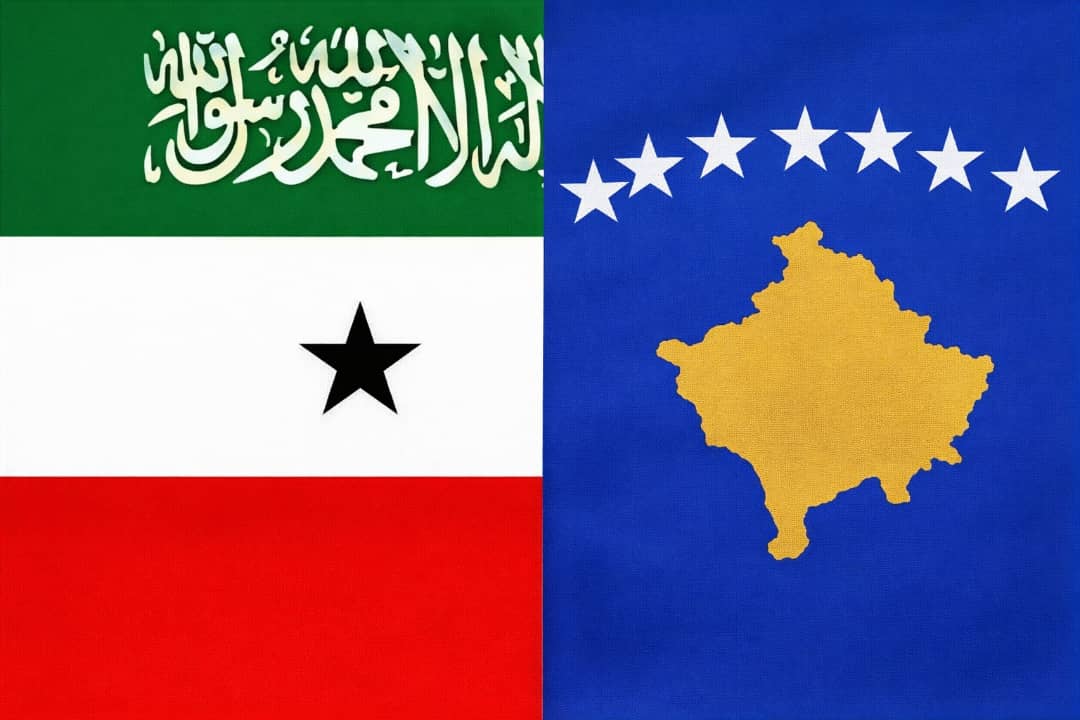
The cases of Somaliland and Kosovo expose one of the clearest examples of hypocrisy and double standards in modern international politics. Both emerged from the collapse or failure of a larger state. Both followed periods of extreme violence against civilian populations. Both built their own institutions and maintained internal stability. Yet the international response to these two cases has been sharply different. Nowhere is this contradiction more visible than in the position of Turkey.
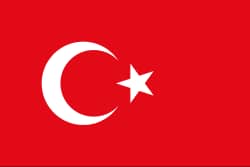
Turkey strongly supports Kosovo’s independence from Serbia, arguing that the people of Kosovo suffered repression, war crimes, and denial of political rights, and therefore deserved self-determination. At the same time, Turkey firmly rejects Somaliland’s claim to statehood and insists on the territorial integrity of Somalia. Ankara presents this as a principled stand based on international law. When the two cases are examined side by side, that claim does not hold.
Table of Contents
Historical truth versus Political convenience
Somaliland’s modern case begins with history, not rebellion. The territory was a British protectorate that gained independence on 26 June 1960 as a sovereign state. It voluntarily united with Italian Somaliland five days later to form the Somali Republic. That union was never ratified by a popular referendum in Somaliland and quickly became deeply unbalanced. Political power, economic resources, and state institutions were concentrated in Mogadishu, while Somaliland was marginalised.
By the 1980s, repression turned into open violence. The military regime in Mogadishu treated Somaliland not as a region with grievances but as an enemy population. In 1988, the Somali Air Force bombed its own cities, most notably Hargeisa and Burao. Fighter jets took off from local airports and deliberately targeted civilian neighbourhoods, markets, hospitals, and water points. An estimated 80 percent of Hargeisa was destroyed. Hundreds of thousands fled to Ethiopia. Tens of thousands of civilians were killed.
From Hargeisa to Pristina: Unequal Responses to Mass Atrocities
These were not accidental wartime incidents. They were systematic attacks on a civilian population. Mass arrests, executions, torture, and the laying of landmines around towns and grazing areas followed. Many international observers, human rights organisations, and survivors describe these crimes as genocide or crimes approaching genocide. At the very least, they were large-scale crimes against humanity committed by a state against part of its own population.
The Somali state then collapsed completely in 1991. There was no central authority, no courts, no army, and no political order. In this vacuum, Somaliland’s clans and community leaders met, reconciled, and rebuilt from the ground up. They restored peace without foreign troops, formed a government, adopted a constitution, held elections, and maintained stability for more than three decades. Somaliland did not break away from a functioning state. It withdrew from a union that had already destroyed itself and turned violently against its people.
https://www.bbc.co.uk/news/articles/c14v4kmg275o
Kosovo as a just cause, Somaliland as an inconvenience
Kosovo’s experience follows a different geography but a similar logic. Under Yugoslavia and later Serbia, Kosovo’s Albanian population faced systematic discrimination, repression, and denial of political rights. The 1998–1999 conflict saw widespread atrocities, ethnic cleansing, and mass displacement. NATO intervened militarily, Serbia lost effective control, and Kosovo was placed under international administration. In 2008, Kosovo declared independence. Turkey recognised it immediately and continues to advocate for its recognition.
Turkey justifies its position on Kosovo by citing suffering, moral responsibility, and the right of a people to decide their future when coexistence becomes impossible. These arguments are familiar and persuasive. The problem is that the same logic applies, often more strongly, to Somaliland.
Unlike Kosovo, Somaliland was already an independent state before union. Unlike Kosovo, Somaliland rebuilt peace and governance without NATO, UN administration, or foreign military protection. Unlike Kosovo, Somaliland has maintained stability in a region surrounded by conflict. And unlike Kosovo, Somaliland has not relied on outside powers to impose order or protect its borders.
Yet Turkey refuses to even consider Somaliland’s case on its merits.
International Law or Strategic Interest?
Instead, Ankara repeats a rigid slogan about Somalia’s territorial integrity. It treats the borders of the failed Somali Republic as sacred, while treating the borders of Serbia as negotiable. This is the core of the hypocrisy.
Turkey often claims that Kosovo is a special case that does not set a precedent. This argument is convenient but intellectually weak. International law does not recognise political convenience as a legal category. Either severe repression, mass atrocities, and state failure matter, or they do not. Either historical consent matters, or it does not.
If the bombing of Pristina and the suffering of Kosovo Albanians justify independence, then the bombing of Hargeisa and the mass killing of Somaliland civilians must at least justify serious international consideration. To deny this is not neutrality. It is selective morality.
Selective Morality in Foreign Policy
Turkey’s position is driven by interests, not principles. In the Balkans, Turkey seeks influence, cultural ties, and alignment with Western policy. Supporting Kosovo serves those goals. In the Horn of Africa, Turkey has invested heavily in Mogadishu through military bases, development projects, and political alliances. Supporting Somalia’s unity protects those investments. This is realpolitik. There is nothing unusual about states acting in their interests. What is unacceptable is presenting interest as universal justice.
The cost of this double standard is not abstract. It delegitimises genuine claims of suffering. It tells the victims of mass violence in Somaliland that their experience matters less than others’. It tells small and emerging states that international law is applied selectively, depending on who you are and who supports you.
The Cost of Double Standards on Justice and Credibility
Turkey frequently presents itself as a moral voice in the Muslim world, a defender of oppressed peoples, and a champion of justice. That image cannot survive sustained contradictions. Moral authority requires consistency.
Recognising Somaliland would not destabilise the region. On the contrary, it would reward peace, reconciliation, and self-reliance. It would acknowledge historical truth and lived reality. It would also send a powerful message that mass atrocities against civilians have consequences, even decades later.
No one is asking Turkey to abandon Somalia or undermine peace. What is being asked is honesty and fairness. Either Turkey admits that its foreign policy is driven by strategic interests and stops moralising, or it applies the same standards to all cases, including Somaliland.
When politics disguises itself as principle
The comparison with Kosovo is unavoidable. The facts are clear. The suffering in Somaliland was real. The bombing of Hargeisa happened. The mass killings happened. The Somali state collapsed. Somaliland rebuilt itself. Ignoring this while celebrating Kosovo’s independence is not principled diplomacy. It is hypocrisy.
History has a long memory. So do nations that have survived destruction and rebuilt themselves with dignity.
https://www.mfa.gov.tr/relations-between-turkiye-and-kosovo_.en.mfa
By Abdikarim Ali Baarjeeh
Aviation Consultant and Writer