
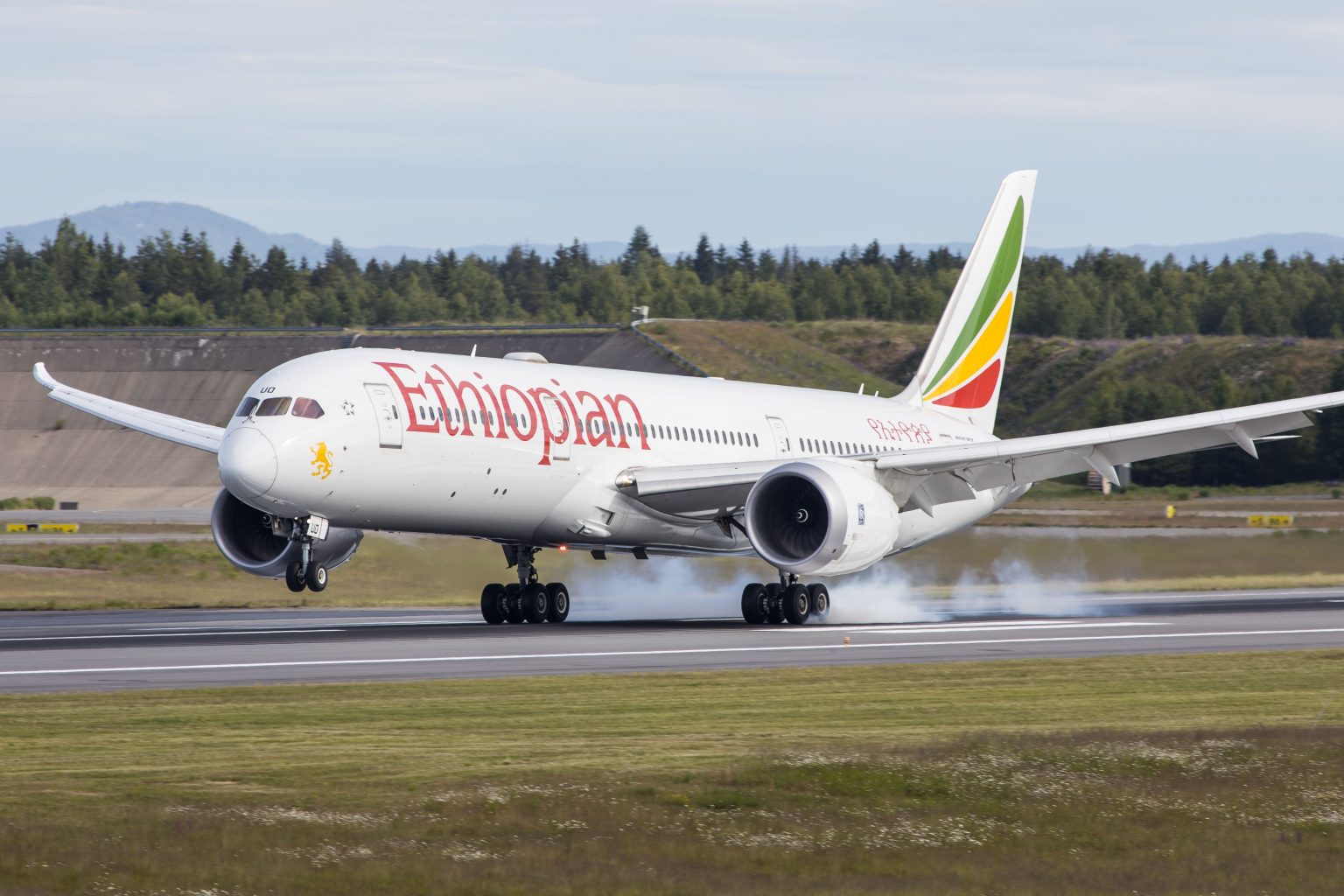
A fascinating, high-stakes arms race is quietly unfolding across Eastern Africa. From Nairobi and Entebbe to Kigali and Dar es Salaam, regional airlines are aggressively placing order hooks with Original Equipment Manufacturers (OEMs), adding narrow body aircraft and scaling up seat capacity.
On paper, the logic seems bulletproof. Eastern Africa is currently the fastest-growing aviation sub-region on the continent, capturing an impressive 23% of total African passenger traffic according to recent African Airlines Association (AFRAA) data. Yet, beneath the glossy press releases detailing new route maps and incoming hulls lies a dangerous strategic misconception.
Every regional government looks at Ethiopian Airlines with its massive network of 147 aircraft, plans to receive over 100 more by 2032, and the newly broken ground on the $12.5 billion, 60-million-passenger Bishoftu International Airport and thinks: We can replicate that.
But they are chasing a mirage. In the rush to build matching fleets, East Africa’s expanding carriers are ignoring three brutal market realities.
Table of Contents
The intercontinental asymmetry: where the passengers actually are
The core justification for fleet expansion is the assumption that African travel demand is uniformly exploding. It isn’t. The data reveals a massive, structural asymmetry in where traffic is growing.
According to AFRAA’s recent transport metrics, international and intercontinental traffic dominates the African market share. Across the continent, international schedules have seen passenger revenue jump by over 10% year-on-year, with total capacity split heavily in favour of long-haul routes.
Conversely, domestic and localized intra-African traffic remains severely constrained. In East Africa, domestic travel accounts for less than half of regional traffic, while intra-African routes lag behind flights to Europe and the Middle East.
The blunt reality? The passengers justifying these massive fleet investments are not flying locally from Nairobi to Kisumu or Entebbe to Gulu. They are intercontinental transit passengers moving from Mumbai to Paris or London to Lilongwe. International capacity is up roughly 18.6% across the continent, while domestic capacity has only crawled up by around 3.3%.
Ethiopian Airlines succeeds because its massive multi-hub, hub-and-spoke architecture is optimized to capture this exact 80% transit footfall. One might be tempted to think that smaller regional carriers expanding their narrow-.+xbody fleets without these global network feed systems are simply buying expensive assets to dump capacity into low-yield, over-contested local routes. But are they really?

The operational cost penalty
Expanding a fleet does not automatically unlock economies of scale; in Africa, it often expands the burn rate. African carriers operate within a punishing macroeconomic framework that penalizes growth without deep capital structural reforms.
Jet fuel prices in the region consistently trade at a 12% to 17% premium over the global average. Coupled with airport passenger taxes and infrastructure charges that run up to 15% higher than international baselines, the cost of operating an additional hull in East Africa is fundamentally higher than anywhere else on earth.
Furthermore, aircraft financing and hull insurance in sub-Saharan Africa carry substantial risk premiums. When an airline adds aircraft without fixing its corporate supply chain, optimizing technical logistics, or anchoring predictable lifecycle governance, it isn’t scaling it is bloating.
The Illusion of the open sky
Many regional boards are betting heavily on policy shifts, specifically the Liberalization frameworks and the push for Free Route Airspace (FRA). The assumption is that the skies will fully open, and a larger fleet will allow them to capture the subsequent spill over.
While intra-African connectivity based on capacity shows that 3rd and 4th freedom traffic rights command 39% of the market, 5th freedom traffic rights, the actual legal mechanism allowing an airline to fly between two foreign countries lags heavily at just 22%. Protectionism, high visa friction, and regulatory gridlock mean that the fully liberalized African sky is arriving much slower than the aircraft orders are.
My verdict
When International Air Transport Association (IATA) reminds us that African carriers historical net profit margins hover around a razor-thin 1.0% (($200 million out of a $41 billion global pie) capturing a microscopic fraction of the global profit pie, fleet expansion cannot be treated as a vanity project or an exercise in national prestige.
The future will not accommodate five mini-Ethiopian Airlines in East Africa. Instead, it will divide the market into three distinct realities:
The Scale Winners: Mega-hubs like Addis Ababa that leverage immense infrastructure to drop unit costs.
The Subsidized Zombies: National carriers that expand fleets for political signalling, destined to live on continuous taxpayer bailouts.
The Strategic Restorers: The nimble, mid-sized operators who stop playing the losing capacity game against Gulf giants and instead pivot to become high-yield regional feeders or dedicated cargo players, capturing a slice of East Africa’s commanding 30% air freight market share.
In aviation, gravity always wins. If East African airlines want to sustain their growth momentum, they must stop chasing the size of the Ethiopian model and start emulating the disciplined, cold-hearted commercial governance that built it.
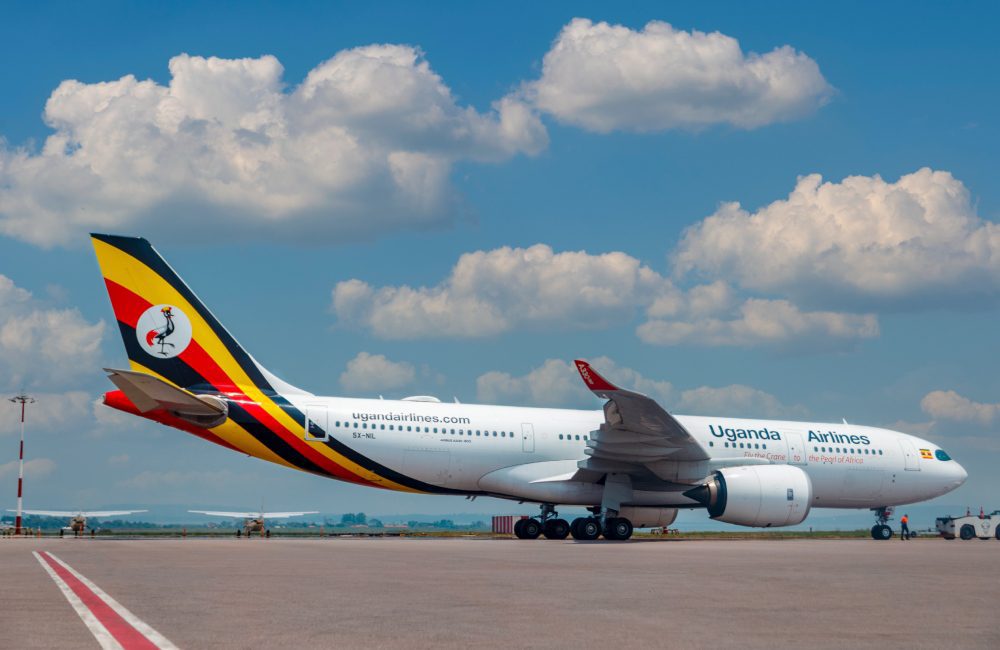
The African aviation market is overwhelmingly an intercontinental transit market. Airlines like Uganda Airlines or regional upstarts cannot justify massive fleet expansions based on domestic or pure local point-to-point regional demand. The volume simply isn’t there locally. If you don’t have the network to capture that 77% international flow, a larger fleet is just an anchor. Yet, if you do not have the regional fleet to free your long-haul frames from high cycle regional hops, your network is significantly incapacitated.
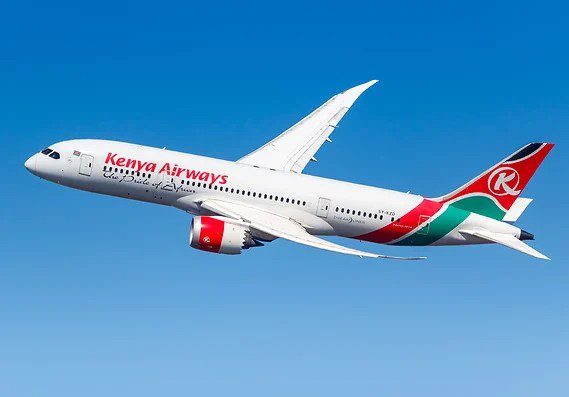
Ethiopian Airlines is operating at a scale that is nearly six times larger than its closest East African rival, Kenya Airways. Even more telling, while smaller regional carriers are planning massive expansions, Kenya Airways the established regional heavyweight, is seeing its capacity slightly contract as it searches for that multi-billion-dollar investor to restructure. This proves that blindly adding hulls doesn’t equal growth; efficiency and restructuring come first.
East African airlines aren’t just competing against Ethiopian or the Gulf Giants (like Emirates). Low-cost European carriers are aggressively eating up capacity on the continent (particularly North/East connectors). EasyJet’s 20% explosion shows that the aggressive growth efficiency lies in ultra-low-cost point-to-point modelling, not bloated, subsidized national flag carriers.
The data backs up my verdict. The May 2026 Africa Aviation Market overview shows a brutal asymmetry: a staggering 77% of all airline seats on the continent are for international routes, while domestic capacity sits at just 23%. Worse yet, while Ethiopian Airlines continues its undisputed dominance at over 2 million seats (+7.3% growth), regional heavyweights like Kenya Airways have actually seen capacity contract (-1.1%).
https://www.linkedin.com/pulse/chasing-ethiopian-model-what-east-africas-fleet-boom-ignores-gitonga
By Christopher Gitonga