Ethiopia’s birr faces further losses as the nation restructures its debt after a steep depreciation made it one of the world’s worst currencies this year.
The unit fell more than 15% against the dollar in 2025, the weakest performance among those tracked by Bloomberg, after the Argentine peso and Turkish lira.
“Our view is one of gradual further depreciation, but slower than the recent spike,” said Giulia Filocca, an analyst at S&P Global, pointing to progress on the debt restructuring as a key yardstick for attracting investment and bolstering confidence in the currency.
he Horn of Africa nation hopes to conclude the revamp under the Group of 20 Common Framework by mid-year and has reached a memorandum of understanding with Official Creditor Committee nations including China and France to restructure $3.5 billion of loans.
But negotiations with private creditors are ongoing, after talks with holders of a $1 billion Eurobond that the country defaulted on in 2023 collapsed in October without an agreement.
“If they are able to complete the Eurobond restructuring process then that may give some comfort to investors and the economy,” said Kevin Daly, portfolio manager at Abrdn Investments Ltd.

Ethiopia was granted a $3.4 billion International Monetary Fund extended credit facility in July 2024, in exchange for allowing its currency to float freely, open up its financial sector to foreign investment and make plans to privatize state-owned enterprises.
The IMF said on Dec. 10 that it had reached a staff-level agreement under the facility’s fourth review that would give the country access to about $261 million, once it was approved by the board of the Washington-based lender.
It said that exports from Ethiopia, which is a large coffee producer, have more than doubled in value, government revenue has grown strongly and inflation has declined.
Ethiopia’s annual inflation cooled to 10.9% in November from 18.6% in July 2024, when the foreign exchange market was liberalized. Economists argue that a slower pace of inflation can reduce pressure on a country’s currency.
“There are reasons to be more optimistic as we approach 2026,” said Daniel Wood, portfolio manager at William Blair Investment Management, citing the IMF program alongside higher export earnings that have helped narrow Ethiopia’s current account deficit, and optimism that there will be a deal with Eurobond holders in the coming months.
“We continue to follow developments in Ethiopia closely but do not yet have sufficient conviction to make an investment in this market,” Wood said.

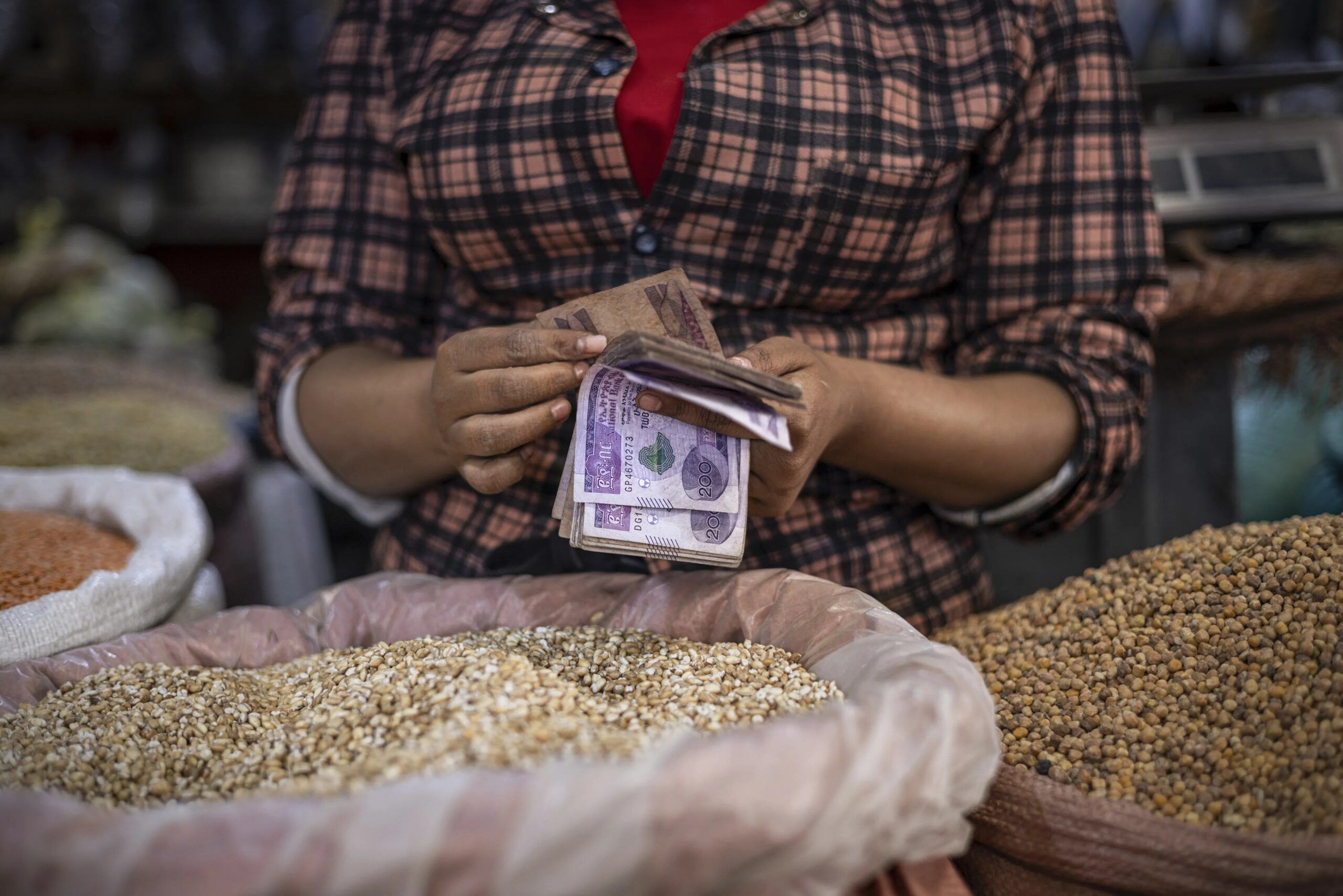
To be sure, dollar scarcity in Africa’s second-most populous economy is putting strain on the local currency. That’s widening the spread between the official market — at around 150 birr to the dollar — and the unofficial market, where the birr can fetch around 180 to a dollar.
Biniam Bedasso, a research fellow at Center for Global Development, a Washington-based think tank, said restoring the birr’s health would take time, citing challenges including an unpredictable tax policy and a fragile security situation in parts of the country.
“Given the underlying structural pressures on the birr, together with behavioral responses driven by expectations of further depreciation, there is little reason to expect a reversal of the current trend in the near term,” he said.