The war in Sudan is no longer confined to Khartoum, Darfur, or El Fasher. It has spread across borders, ports, airports, and political networks throughout the Horn of Africa. What began in April 2023 as a power struggle between the Sudanese Armed Forces (SAF) and the Rapid Support Forces (RSF) has evolved into one of the world’s worst humanitarian disasters. Tens of thousands have been killed, millions displaced, and entire cities destroyed.
War logistics
But wars do not continue without logistics. Weapons, fighters, fuel, intelligence, transport corridors, and foreign money sustain conflicts. Increasingly, international investigations, satellite imagery, intelligence reports, and media investigations are pointing toward a disturbing reality: parts of Somalia and Somaliland, particularly Bossaso and Berbera, have become critical logistical corridors in the Sudan conflict.
The role of the United Arab Emirates
At the center of the allegations is the United Arab Emirates (UAE), a Gulf power whose growing military and commercial footprint across the Horn of Africa has transformed regional geopolitics over the last decade. The UAE officially denies supporting the RSF. However, multiple investigations by journalists, analysts, rights organizations, and regional observers have raised serious questions about the role of Emirati networks operating through Somalia and Somaliland territories.
The most alarming aspect is not only foreign involvement. It is the growing perception that Somalia’s federal and regional authorities have either tolerated, ignored, or quietly enabled these operations.
From trade routes to military corridors
For centuries, the Red Sea and Gulf of Aden connected Africa, the Middle East, and Asia through commerce and culture. Today, those same routes are increasingly militarized.
The UAE has spent years building strategic influence across the Horn of Africa through ports, military agreements, infrastructure investments, and security partnerships. In Somaliland, Dubai-based DP World invested heavily in the Port of Berbera. In Puntland, Emirati-backed security partnerships strengthened the Puntland Maritime Police Force (PMPF).
Initially, these partnerships were presented as anti-piracy cooperation and economic development projects. However, critics now argue that some of these facilities evolved into strategic military and logistics hubs serving wider regional objectives.
Investigations by Middle East Eye, Reuters, Africa Intelligence, and several regional publications describe a pattern of frequent cargo aircraft activity in Bosaso linked to the Sudan war. Large IL-76 cargo planes reportedly landed regularly, unloading sealed containers under heavy security before cargo was transferred onward toward Sudan through neighbouring countries like Chad.
According to these reports, Bosaso became far more than a normal airport. It allegedly functioned as a transit platform connecting Gulf logistics networks to the RSF war machine in Sudan.
Bosaso: the shadow air bridge
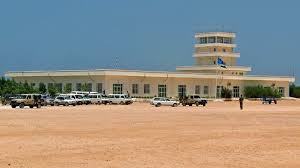
Perhaps the most explosive allegations emerged from investigations into Bosaso Airport in North-eastern Somalia.
A detailed Middle East Eye investigation alleged that the UAE used Bosaso as a covert supply and transit hub for military logistics connected to the RSF. The report cited local security officials, port authorities, flight tracking data, and satellite imagery.
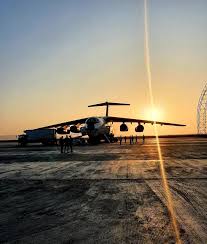
According to the investigation, cargo planes arrived carrying sealed containers labelled “hazardous,” with unusually tight security surrounding unloading operations. Containers reportedly moved rapidly between the port and airport with little transparency about their contents or final destination.
More controversially, the reports alleged that Colombian mercenaries transited through Bosaso en route to Sudan. Photographs and testimonies cited by investigators described foreign fighters being housed near the airport before transfer toward conflict zones linked to the RSF.
The UAE has denied supporting the RSF. Yet concerns intensified after Reuters documented suspicious cargo flight networks tied to remote airstrips and Gulf logistics systems suspected of supplying Sudan’s paramilitary forces.
For Sudanese civilians trapped in Darfur, these allegations are not abstract geopolitical debates. Every new weapons shipment potentially means more destroyed villages, more massacres, and more displaced families.
Berbera’s strategic position
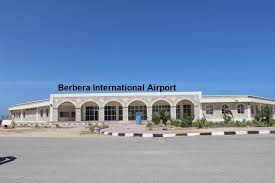
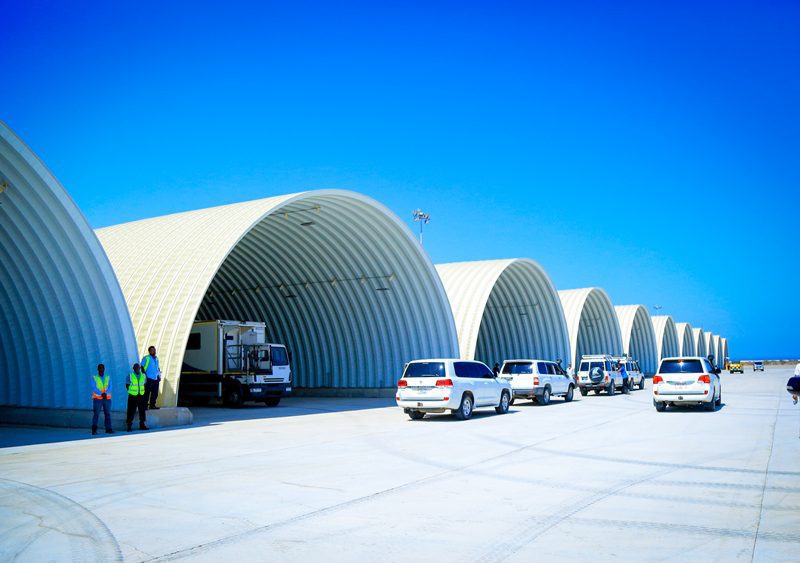
While Bosaso has received the most direct scrutiny, Berbera’s strategic importance cannot be ignored. Port of Berbera has become one of the UAE’s most important investments in the Horn of Africa. Located along one of the world’s busiest maritime trade corridors, Berbera offers strategic access to the Red Sea, the Gulf of Aden, and East Africa.
The UAE previously established military arrangements in Berbera, including training and defence cooperation agreements. Although publicly available evidence directly connecting Berbera Airport to Sudan operations remains more limited than Bosaso, analysts increasingly view the broader Emirati infrastructure network in Somaliland and Puntland as part of a regional power projection strategy.
Satellite imagery and security analyses published by regional observers point to expanding Emirati military infrastructure along Somalia and Somaliland’s coastlines, including air facilities, logistics compounds, and security installations.
The Horn of Africa is no longer merely a commercial gateway. It has become an arena for Gulf competition, proxy rivalries, and geopolitical manoeuvring.
Somalia’s federal government: silence or complicity?
The most sensitive issue is the position of the Federal Government of Somalia.
Somalia officially supports Sudan’s sovereignty and territorial integrity. Somali leaders publicly express solidarity with the Sudanese people. Yet critics argue that actions on the ground tell a different story.
Human rights advocates and regional analysts increasingly accuse Somali authorities of failing to investigate suspicious military logistics operations occurring within Somali territory. Some accuse Mogadishu of deliberate silence motivated by financial dependence, political pressure, and strategic ties with Gulf States.
This perception damages Somalia’s credibility internationally.
If weapons, mercenaries, or military cargo are indeed transiting through Somali airports and ports toward Sudan’s war zones, then difficult legal and moral questions emerge. Does Somalia have knowledge of these activities? Who authorized them? Are federal institutions capable of monitoring foreign military logistics inside the country? Or has Somalia become too fragmented politically to control what happens within its own territory?
These questions matter because international law places obligations on states regarding arms transfers and involvement in conflicts associated with war crimes or crimes against humanity.
The human cost in Sudan
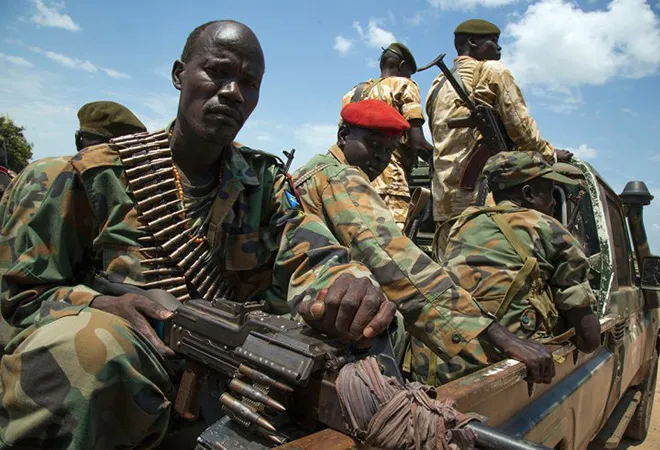
The RSF has been repeatedly accused of severe abuses in Darfur and other parts of Sudan. International organizations, rights groups, and survivors have documented allegations including massacres, sexual violence, ethnic targeting, forced displacement, and attacks on civilians.
The battle for El Fasher became a symbol of Sudan’s suffering. Civilians trapped by siege conditions described starvation, shelling, executions, and systematic terror.
In this context, any external logistics network sustaining the conflict becomes deeply controversial.
Wars continue because supply chains continue. Ammunition does not appear magically. Aircraft require fuel, airspace, maintenance, and transit points. Fighters require transportation and financing. Behind every battlefield is a logistical architecture.
That is why Bosaso and Berbera matter.
Gulf rivalries and the Horn of Africa
The Sudan war cannot be understood in isolation from wider Gulf competition.
Over the past decade, Gulf States have expanded aggressively into the Horn of Africa through ports, military partnerships, commercial investments, and political alliances. The UAE, Saudi Arabia, Qatar, and Turkey all compete for influence in the region.
Think tanks and policy institutes have warned that these rivalries risk turning fragile African states into arenas for proxy struggles.
Somalia’s internal fragmentation makes it particularly vulnerable. Federal member states often pursue their own foreign partnerships independent of Mogadishu. Somaliland operates separately from the federal government altogether. This creates an environment where foreign powers can build direct relationships with regional authorities.
The result is a weakened Somali sovereignty increasingly shaped by external actors.
Somaliland and Puntland caught in a geopolitical storm
For both Somaliland and Puntland, Emirati investment brought economic benefits, security partnerships, jobs, and infrastructure development. Berbera Port modernization expanded trade opportunities. Bosaso benefited from anti-piracy cooperation and financial support.
However, dependence on foreign security partnerships carries risks.
If local infrastructure becomes associated with foreign military operations or controversial wars, regional authorities may face diplomatic consequences and reputational damage.
Sudan has already raised concerns regarding alleged support routes linked to Somalia’s North-eastern regions. Analysts warn that Somalia could gradually become entangled in regional conflicts beyond its control.
For Somaliland specifically, this presents a delicate challenge. Somaliland seeks international recognition and projects itself as a stable and democratic partner in the region. Any perception that its territory is being used in opaque military operations could complicate its diplomatic ambitions.

The need for transparency
The accusations surrounding Bosaso and Berbera require serious independent investigation, not propaganda or denial. If the allegations are false, transparent investigations would help clear reputations and restore confidence. However, if the allegations are true, then Somalia and Somaliland faces a profound national and moral crisis.
No African country should allow its territory to become a platform for fuelling another African nation’s destruction. Sudan’s tragedy has already destabilized the wider region. The Horn of Africa cannot afford to become a permanent corridor for proxy warfare.
Somalia itself understands the pain of state collapse, foreign interference, militia politics, and endless conflict. That experience should make Somali leaders more sensitive, not less, to the suffering unfolding in Sudan.
https://www.bbc.com/news/articles/c1422nrgm1jo
A dangerous precedent for Africa
The broader issue extends beyond Somalia and Sudan.
Across Africa, foreign powers increasingly use ports, airfields, private security companies, and local political alliances to project influence. Weak governance structures and economic vulnerability create openings for external manipulation.
Today it is Sudan. Tomorrow it could be another African conflict fuelled through hidden logistics corridors.
African sovereignty means more than flags and borders. It means controlling national territory, airspace, ports, and foreign military activity transparently and lawfully.
The allegations surrounding UAE-linked operations through Bosaso and Berbera should therefore concern the entire continent.

Africa cannot build peace while allowing its infrastructure to become pipelines for endless wars.
The people of Sudan deserve peace. The people of Somalia deserve sovereignty. And the Horn of Africa deserves cooperation, trade, and development — not secret wars conducted through its airports and ports.
By: HTN Team
info@horntodaynews.com